How To Compare Options For A Turntable And Speaker Setup That Is Easy To Live With
A practical step-by-step guide to how to compare options for a turntable and speaker setup that is easy to live with, including preparation, instructions, common issues, tips, and next steps.
How To Compare Options For A Turntable And Speaker Setup That Is Easy To Live With
This guide helps you choose a turntable and speaker setup that fits your daily life, balancing sound quality, convenience, and room aesthetics. You will learn to prioritize features that matter for easy ownership, avoid common pitfalls, and make a final choice you can live with happily.
Fast Answer
- Focus on powered speakers with a built-in phono preamp to simplify your setup and avoid extra boxes.
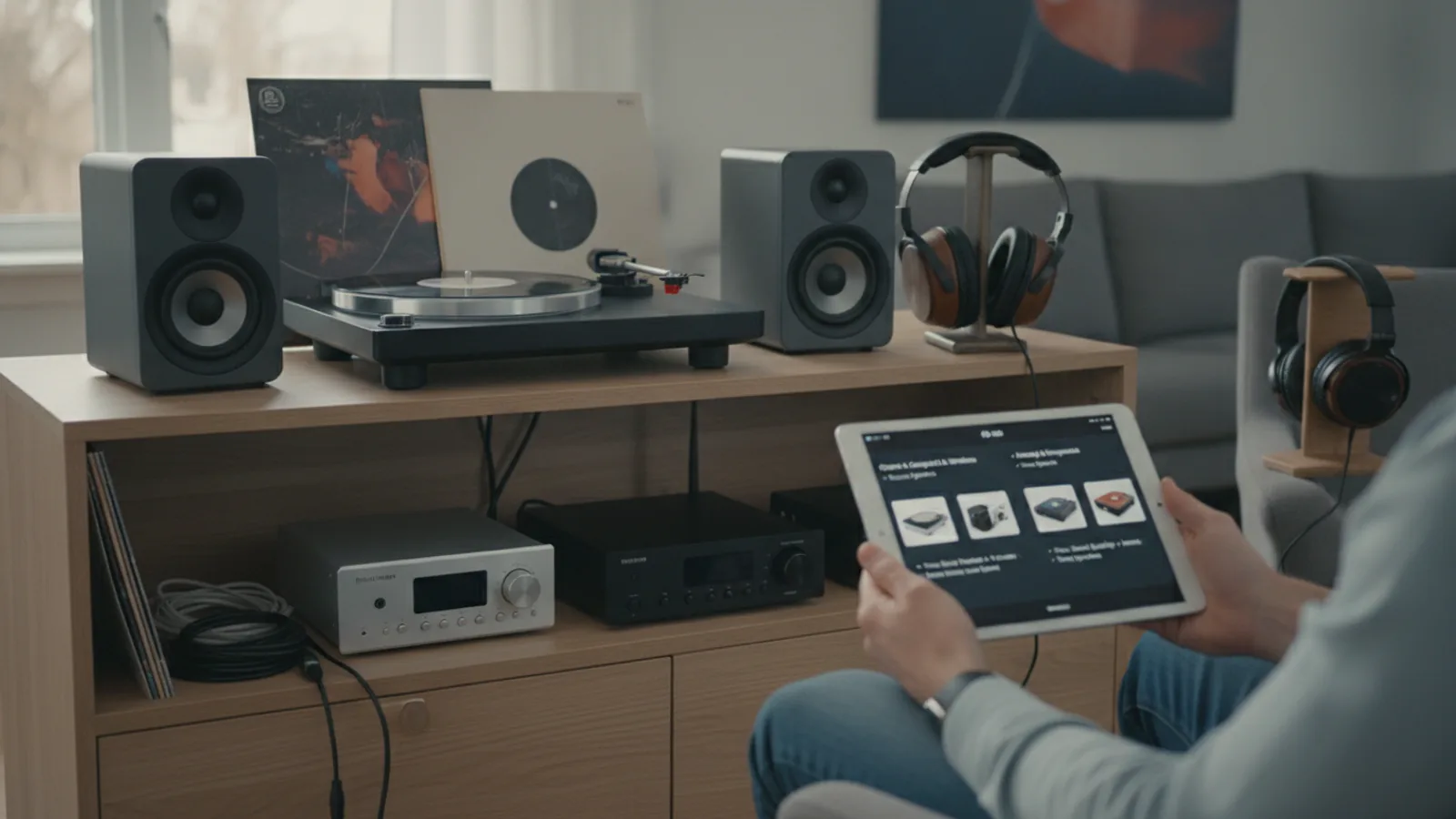
- Choose a turntable with a built-in phono stage and switchable outputs for easy connection to both powered speakers and your existing audio system.
Before You Start
- Measure the intended listening area and the distance from your listening position to the proposed equipment location.
- Decide on the primary use: casual background music, critical listening, or parties, as this influences speaker type and turntable features.
- Set a realistic budget that includes all necessary components such as turntable, speakers, and cables, but allow for future upgrades.
- Think about the visual style you want, matching the turntable and speakers to your room decor, and consider available shelf or stand space.
Step-by-Step Instructions
Determine Your Listening Environment and Needs
Start by evaluating your room size and layout. For a small room (up to 200 square feet), bookshelf speakers on stands or a desk may be ideal. For a larger open space, floor-standing speakers might provide better fill. Consider how you listen: do you want background music while cooking or focused listening sessions? Your answer determines speaker power and turntable features. Measure the distance from where you’ll sit to where the speakers will go; this helps you choose speaker size and placement for a good stereo image. Also, think about furniture: a dedicated audio rack or a sturdy shelf can reduce vibrations. Check if your room has hard floors or carpet, as this affects sound reflections. If you’re short on space, a compact all-in-one system might be practical. Write down your primary listening scenario and room dimensions to guide every other decision. This step matters because it prevents you from overbuying or underbuying based on assumptions.
Decide Between Active and Passive Speakers
Powered (active) speakers have built-in amplifiers, so you don’t need a separate receiver. They are generally easier to set up and often include multiple inputs like Bluetooth, which adds convenience. Passive speakers require an external amplifier or receiver, giving you more flexibility to upgrade components separately. For an easy-to-live-with setup, powered speakers are usually the better choice because they reduce cable clutter and the number of boxes. Consider the input options: some powered speakers have a phono input, which means you can connect a turntable directly without a separate phono preamp. Check the speaker’s power rating and driver size to match your room. Listen to a few models if possible, but also consider the controls: front-mounted volume knob and source switch are handy. This step matters because it defines the core of your system and impacts future upgrade paths. If you value simplicity, powered speakers win; if you tinker, passive may be for you.
Evaluate Turntable Features for Convenience
When comparing turntables, focus on features that make daily use easy. A built-in phono preamp allows you to connect directly to powered speakers or aux inputs without extra equipment. Switchable outputs (line and phono) provide flexibility for different amplifiers. Look for a belt-drive model with an auto-stop feature that lifts the tonearm at the end of the record, preventing wear. Some models have electronic speed control to switch between 33 and 45 RPM with a button, which is simpler than moving the belt. Build quality matters: a heavier platter reduces wow and flutter, and an adjustable counterweight lets you set tracking force correctly for your cartridges. Consider ease of cartridge replacement – some have a standard mount, while others require tools. Also, check the connectivity: most have RCA outputs, but some include Bluetooth for wireless speakers (though this may degrade sound quality). This step matters because these features directly affect how often you use the turntable and how satisfied you are with the experience.
Assess Setup and Placement Requirements
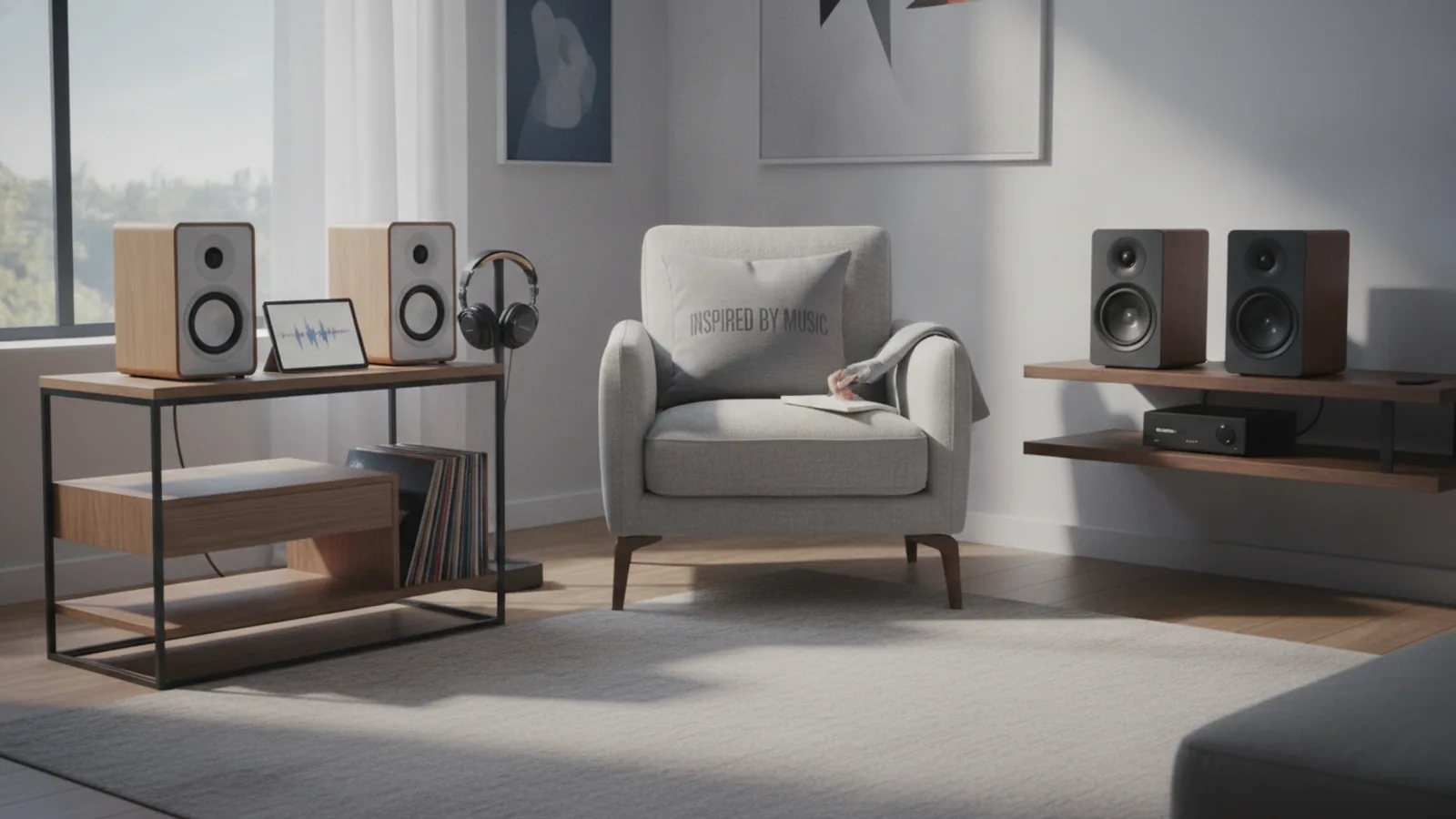
Think about where each component will sit. Place the turntable on a stable, level surface away from speaker vibrations. Ideally, speakers should be on separate stands or shelves, not on the same table as the turntable. If that’s unavoidable, use isolation pads under the speakers to reduce vibration transfer. For wired connections, measure the distance from turntable to speakers to know what cable lengths you need. Some turntables have built-in Bluetooth, but using a wired connection is better for sound quality and reliability. Consider the speaker layout: for the best stereo image, the tweeters should be at ear level when you’re seated. Angle them slightly toward your listening position if necessary. Plan for cable management: use ties or channels to keep wires tidy and avoid tripping hazards. Ensure there are power outlets nearby for all components. If you choose a wireless option, check that the Bluetooth pairing is straightforward and that the speakers support the codecs your turntable sends. This step matters because poor setup can ruin an otherwise good system, causing feedback, poor imaging, and inconvenience.
Compare Key Technical Specifications
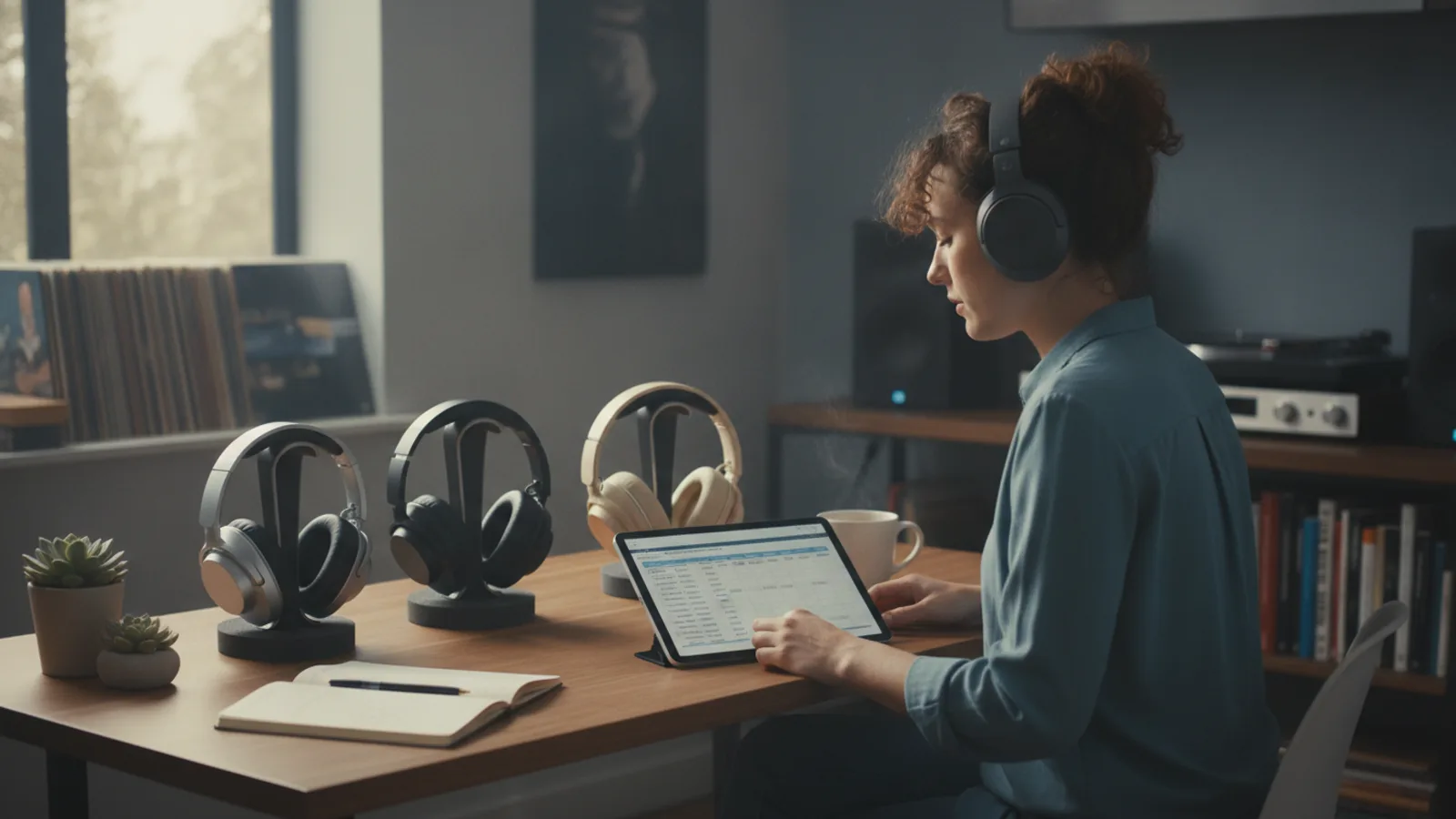
When comparing models, look at specifications that matter to your daily experience. For speakers, consider sensitivity (how loud they play with a given input), impedance (compatibility with amplifiers), and frequency response (the range of bass and treble). For turntables, check the signal-to-noise ratio (higher is better), wow and flutter (lower is better), and the included cartridge quality. But don’t get bogged down in numbers – instead, focus on practical aspects like ease of adjustment and build quality. For example, a turntable with a carbon-fiber tonearm may be more stable than an aluminum one, but a well-designed aluminum tonearm can be just as good. You should also verify that the speaker’s inputs match your connection needs: RCA, optical, or Bluetooth. Some speakers have a 'phono' input, which implies the turntable must have a built-in phono stage. If your turntable has a phono output only, you’ll need a separate phono preamp. Create a shortlist of three to five products and compare them side-by-side in a spreadsheet or notebook. This step matters because specs help you narrow down choices, but real-world usability is just as important as raw numbers.
Make a Balanced Final Decision and Purchase
After your research, it’s time to choose. Rank your priorities: sound quality, convenience, aesthetics, and budget. If you live in a small apartment, convenience may outweigh raw fidelity. Think about the complete cost: turntable, speakers, cables, and maybe a phono preamp if needed. Set a maximum budget and stick to it. If possible, visit a store to listen to a few setups, but remember that the room acoustics also affect sound. Consider the system’s upgrade path: can you later add a subwoofer or better cartridge without replacing everything? Purchase from a reputable retailer with a good return policy, so you can test at home. Once you buy, set up carefully, following the manual and our placement guidance. Take two weeks to live with the system, adjusting speaker position and turntable level as needed. If something isn’t right, use the return policy. This step matters because a logical decision made with patience results in a system you’ll appreciate for years.
Quick Reference
| Situation | Action | Why it helps |
|---|---|---|
| You have limited space and want minimal clutter. | Choose a pair of compact powered speakers with a built-in phono preamp and a turntable with line-level outputs, and place them on wall-mounted shelves to save floor space. | This reduces the number of components and cables needed, while wall mounting keeps surfaces clear and helps prevent vibrations. |
| You often switch between Bluetooth streaming and vinyl records. | Select speakers that have both a phono input and Bluetooth, and a turntable with a switchable phono/line output, then connect both sources and use the speaker's remote to toggle inputs. | This gives you instant access to both sources without reconnecting cables, which is convenient for daily casual listening. |
| You want to upgrade your cartridge in the future. | Opt for a turntable with a standard half-inch cartridge mount and a removable headshell, and verify that the tonearm supports the weight range of the cartridge you plan to get. | This allows you to easily swap out cartridges without special tools, giving you a flexible upgrade path. |
Common Issues
- A humming or buzzing sound comes from the speakers when the turntable is on.: Check for a ground connection (usually a wire on the turntable) and attach it to the grounding post on the preamp or amplifier. If that doesn't help, move the turntable further from the speakers and power adapters.
- The turntable speeds sound slightly fast or slow.: Use a printed strobe disc or a smartphone app for speed accuracy, and adjust the turntable motor screw or trim pots if available. If not, make sure the belt is correctly placed and not stretched.
- Speakers sound too bass-heavy or muddy, especially near walls.: Move speakers at least a few inches away from walls and corners, and adjust the receiver's or speaker's tone controls to reduce bass. If that doesn't help, consider using foam plugs in the rear bass ports if provided.
Advanced Tips
- Use a cartridge alignment protractor to set the stylus overhang and alignment for better tracking and less record wear.
- Integrate a smart plug that turns off both the turntable and speakers with one command, reducing power consumption when you're not listening.
- Experiment with speaker placement using the 'Rule of Thirds' – position speakers a third of the way into the room for more balanced bass.
Final Checklist
- Measure room dimensions and listening distance to confirm your chosen speakers are appropriate.
- Verify that the turntable's outputs match your speakers' inputs, with additional phono preamps if needed.
- Place the turntable on a stable, level surface away from speakers, and confirm the stylus is correctly aligned.
- Test different speaker positions and adjust tone controls until the sound feels balanced for your ears.
FAQ
Do I need a separate phono preamp?
If your turntable has a built-in phono preamp and your speakers have a line-level input (like AUX or RCA), you do not need a separate one. Check if your turntable's 'phono/line' switch is set to 'line'. If your turntable only has a phono output, you'll need to add a preamp between the turntable and speakers, unless your amplifier has a 'phono' input.
Can I connect a turntable to Bluetooth speakers?
Yes, if the turntable has Bluetooth output and the speakers support Bluetooth. However, this is not ideal for sound quality because Bluetooth compresses the audio. For better fidelity, use a wired connection. Also, some turntables do not have built-in Bluetooth, so you'd need a separate Bluetooth transmitter.
What should I do if I hear skipping during playback?
First, ensure the turntable is on a stable, level surface, also check that the tonearm's anti-skate is set correctly, and that the tracking force matches the cartridge specs. Clean the record and stylus. If skipping persists, consider that the record may be warped or the turntable may be faulty. Also, avoid placing speakers nearby that vibrate the floor.