What To Check Before Choosing A First Vinyl Listening Setup For A Smaller Room
A practical step-by-step guide to what to check before choosing a first vinyl listening setup for a smaller room, including preparation, instructions, common issues, tips, and next steps.
What To Check Before Choosing A First Vinyl Listening Setup For A Smaller Room
Choosing a first vinyl listening setup for a smaller room involves balancing sound quality, space, and budget. This guide helps you assess your room's acoustics, choose appropriate components, and set up your system for the best possible sound without overwhelming the space.
Fast Answer
- Focus on a compact, quality pair of powered or passive bookshelf speakers with a small footprint, and place them at ear level, angled toward your listening spot.
- Prioritize a turntable with a built-in phono preamp (or plan to add one) and adjustable tracking force, then set it up properly on a stable, isolated surface.
Before You Start
- Measure your room's dimensions and note the listening position and wall placements to determine where speakers and furniture will fit.
- Decide on a realistic budget that includes not just the turntable and speakers but also a phono preamp (if needed), speaker stands, and cables.
- Consider the type of music you listen to and your listening habits—this will influence your choice of speaker size and turntable features.
- Read basic guides or watch videos on turntable setup and speaker placement to understand the fundamentals before purchasing.
Step-by-Step Instructions
Measure and Assess Your Room
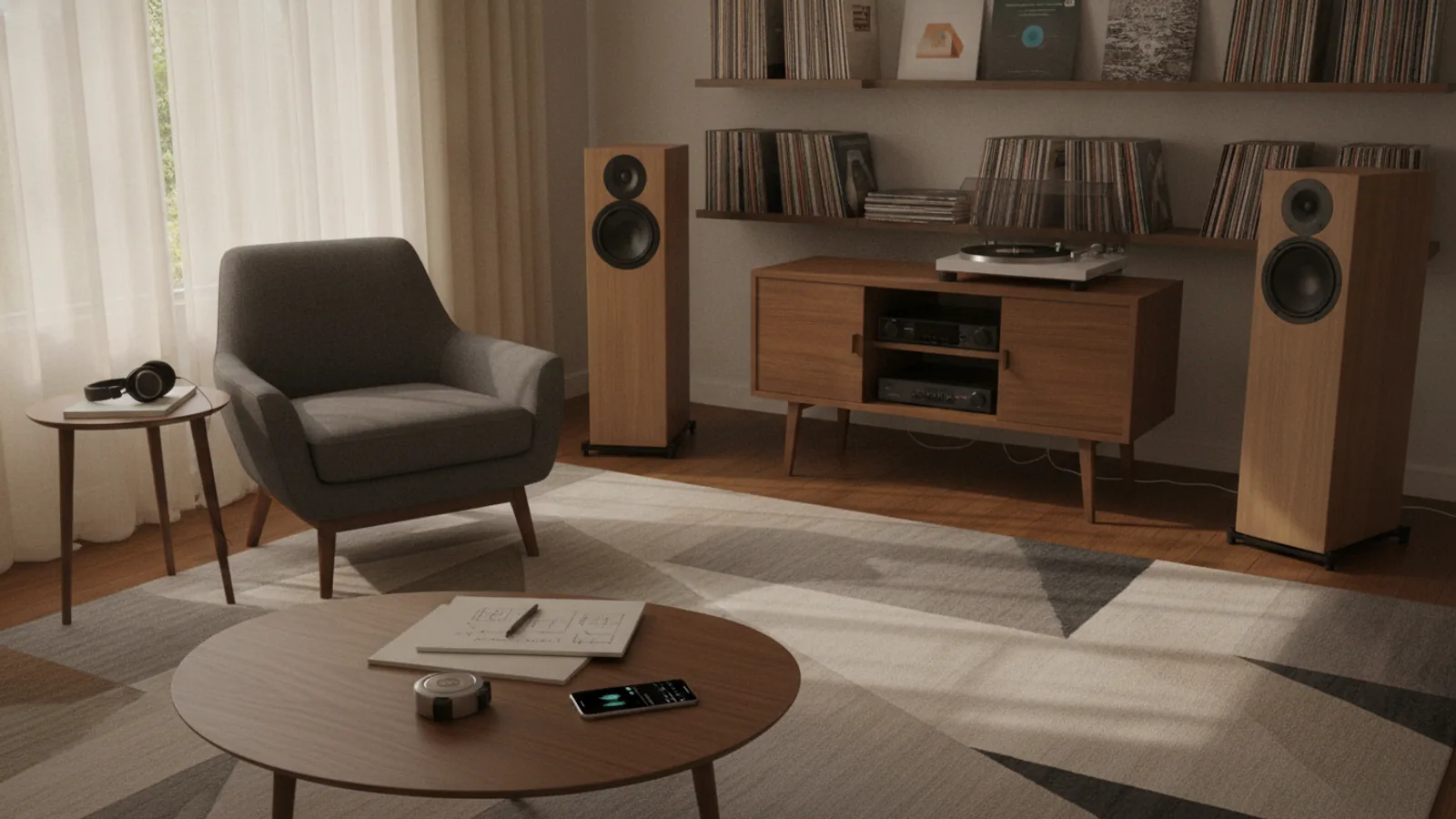
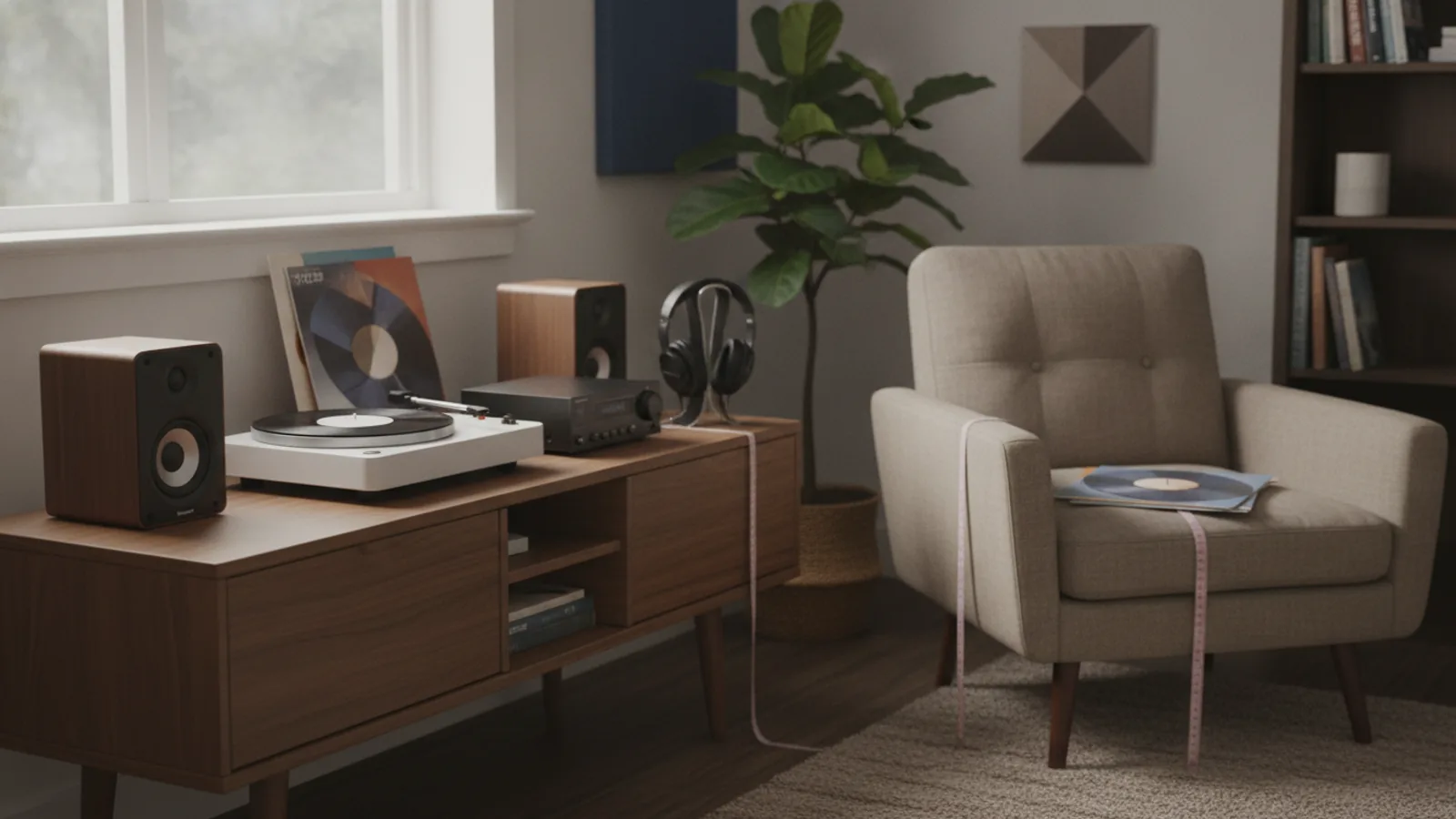
Begin by measuring your room's length, width, and ceiling height. Note the locations of doors, windows, and large furniture pieces. Your listening position matters: if you will sit close to the speakers, you may not need large speakers. If the room is small, oversized speakers can overwhelm the space with boomy bass and create listening fatigue. Instead, aim for a symmetrical setup where you and the two speakers form an equilateral triangle with the speakers angled slightly toward you. Mark the intended spots for your furniture and speakers to visualize the layout. Also, consider adding soft furnishings like a rug, curtains, or a bookshelf to reduce reflections and improve sound clarity. This assessment ensures you buy components that fit both your space and your acoustic needs.
Choose a Suitable Turntable
Select a turntable that fits your room and listening habits. In a small room, you do not need a massive, complex deck. Look for a belt-drive turntable with a built-in phono preamp to simplify your setup. A built-in preamp means you can connect directly to powered speakers with an auxiliary or RCA input, saving space and cost. Also, ensure the turntable has an adjustable counterweight and anti-skate control to properly set the stylus tracking force, which is crucial for record longevity and sound quality. Consider the turntable's size and base material: a heavier base reduces vibrations. Check the user manual for the recommended tracking force and set it correctly using the included gauge. If you plan to upgrade later, choose a model with a removable headshell and a standard mount, but do not over-invest initially.
Select Ideal Speakers and Placement
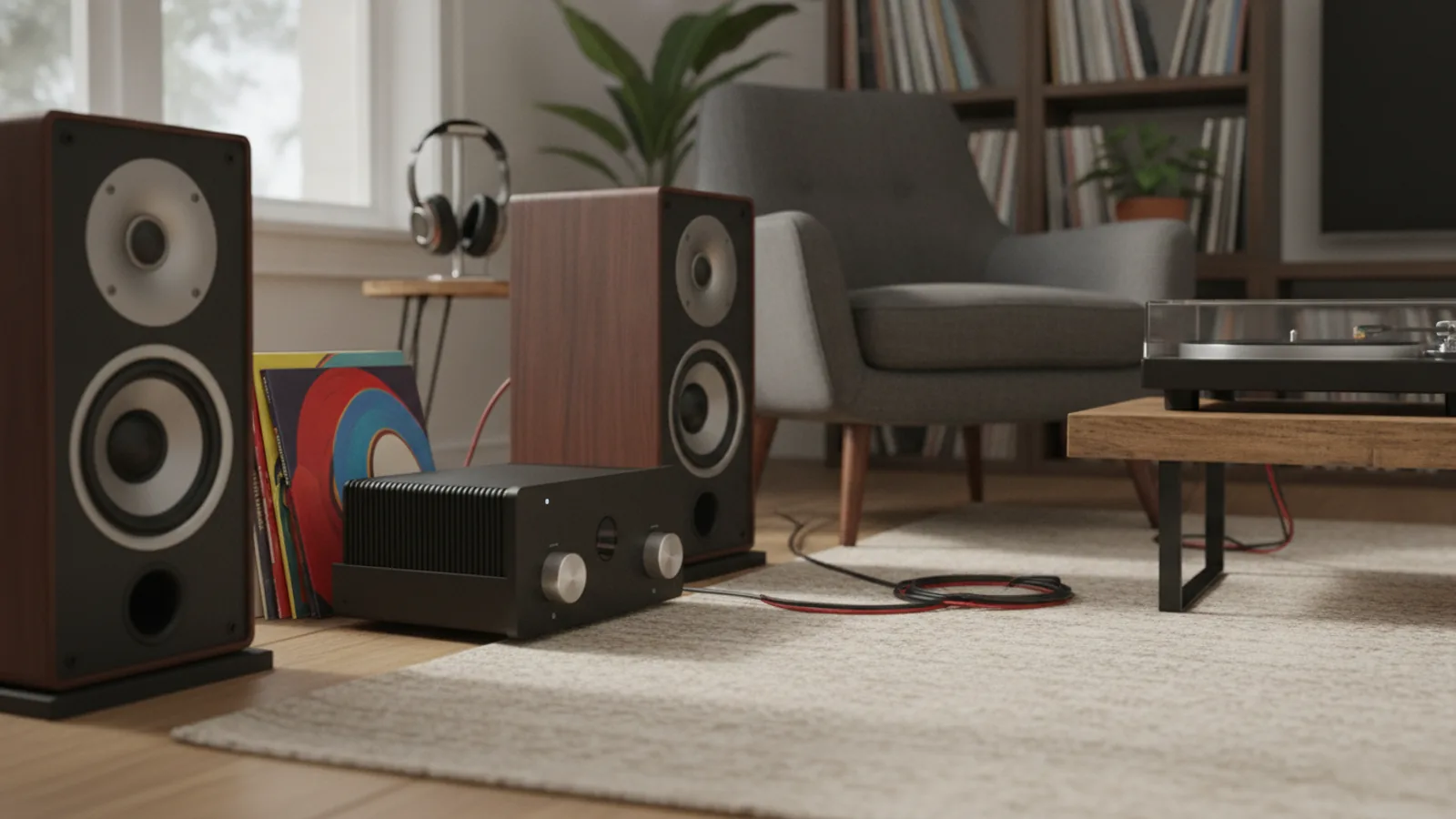
Pick speakers that suit your room size. For a small room, bookshelf speakers are often ideal. They can be placed on stands or wall-mounted. Ensure the speakers are at ear level when you are seated. If using stands, place them on a stable surface to prevent vibrations. For placement, use the rule of thirds: position speakers about one-third of the way from the back wall, and your listening position about one-third of the way from the back wall. Angle them slightly toward you (toe-in) to create a focused stereo image. Avoid placing them in corners or against a wall to prevent excessive bass. If your speakers are rear-ported, leave at least 10-20 cm of space behind them. This placement maximizes clarity and soundstage.
Plan Your Phono Stage and Cables
If your turntable does not have a built-in phono preamp, you will need an external one. This small device boosts the low-level cartridge signal to line-level and applies the correct equalization. Place it close to the turntable to keep the signal path short. Use quality, but not overpriced, RCA cables with proper shielding. Connect the turntable to the phono preamp, then to your speakers or amplifier. Ensure all connections are tight and color-coded (right/left). Check that the grounding wire from the turntable is securely attached to the preamp's ground terminal to prevent hum. Power everything off before connecting components to avoid any electrical pop. Planning your signal chain helps avoid future interference issues.
Set Up and Calibrate Your System
Once everything is connected, power on the system. First, set the turntable's tracking force using the counterweight and antiskate. Place a record on the platter and gently lower the stylus; listen for clarity and any distortion. Adjust the tracking force within the recommended range if needed. Next, check the speaker balance: sit in your listening spot and play a monophonic track—that is, a recording with equal sound in both channels. You should hear the sound centered; if not, adjust the balance control on your amplifier. Also, check the volume: set it to a comfortable level and listen for any distortion from the speakers. Finally, play a variety of music genres to test the system's response. This calibration ensures optimal sound.
Finalize Acoustic Treatment and Positioning
After setting up, listen to your favorite albums and make fine adjustments. Pay attention to bass: if it sounds booming, move the speakers further from the walls or add more soft furniture. If the treble is harsh, consider adding curtains or wall art to reduce reflections. Place a rug on hardwood floors to dampen reflections. If you experience resonance from the turntable, ensure it is on a stable, isolated surface, not near the speakers. You can place a vibration-damping mat under the turntable. Also, consider the room's symmetry: if one side has more furniture, the sound may be unbalanced. Aim to create a balanced acoustic environment. This step is about refining your system to sound best in your specific space.
Quick Reference
| Situation | Action | Why it helps |
|---|---|---|
| Room has hard floors and few furnishings | Place a thick rug in the center of the room and add curtains or a sofa to soften reflections. If possible, add a bookshelf with books to break up flat surfaces. | Hard surfaces cause excessive reflections and echoes, which can muddy the sound and make the stereo imaging unclear. |
| Speakers are placed very close to the wall behind them | Move them at least 20-30 cm forward from the wall, or if using rear-ported speakers, give more space. Alternatively, adjust the bass EQ or use foam port plugs if provided. | Close wall placement boosts low frequencies, causing boomy bass and a muddied overall sound, especially in small rooms. |
| Hearing a low hum or buzz from the speakers when the turntable is on | Check the grounding wire: ensure it is connected to the phono preamp's ground terminal. Also, separate power cables from audio cables. | A grounding loop or electrical interference is likely; fixing these connections eliminates hum and ensures clean sound. |
Common Issues
- Bass sounds boomy and overwhelming: Move speakers further from walls and corners; add a rug or soft furniture to absorb reflected bass. Also, check if the speakers have bass ports and adjust their placement accordingly.
- One speaker sounds louder than the other: Check the balance control on your amplifier, ensure the speaker connections are secure and correct, and re-measure the distance from each speaker to your listening spot.
- Records sound distorted or jumpy: Verify that the tracking force is set correctly according to your cartridge specifications. Clean the record and stylus, and ensure the turntable is on a stable, level surface to prevent skipping.
Advanced Tips
- Consider a subwoofer even in a small room; place it near a wall but not in a corner, and set its crossover low (around 80 Hz) to blend seamlessly with bookshelf speakers.
- Use speaker stands with spikes or isolation pads to decouple speakers from the floor, reducing vibrations and improving clarity.
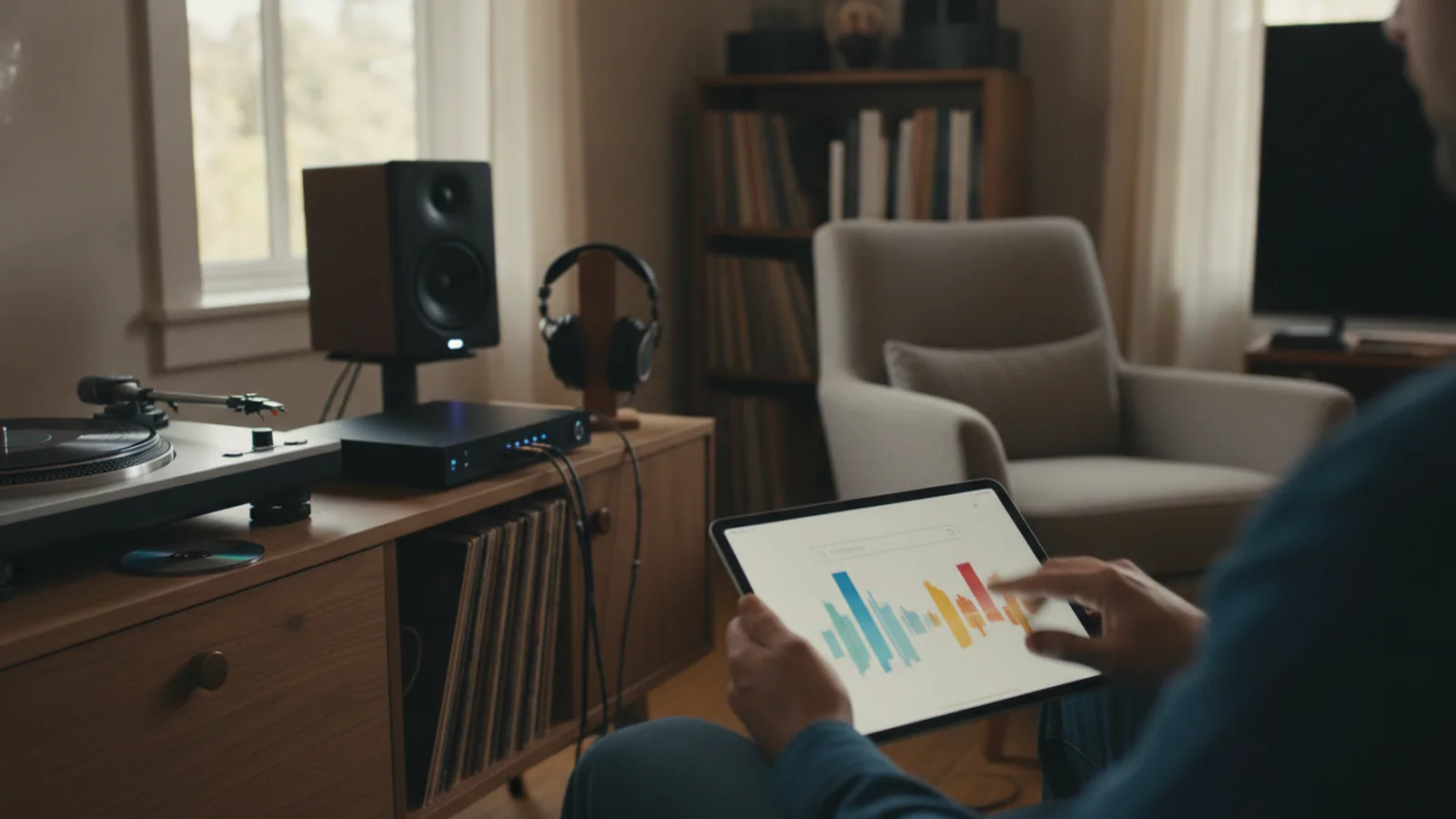
- Experiment with a digital room correction system or a mobile app that measures frequency response to identify problem areas and suggest fixes, but always double-check with your ears.
Final Checklist
- Room dimensions and layout measured, and speaker positions marked to form an equilateral triangle with your listening spot.
- Turntable selected with built-in phono preamp or an external phono stage, and tracking force calibrated to the cartridge's recommended setting.
- Speakers placed at ear level, away from walls and corners, with proper angle and spacing, and acoustic treatment added if needed.
- All connections secure, grounding wire attached, and no hum or interference; system tested with a variety of music.
FAQ
Do I need a separate phono preamp if my turntable has one built-in?
No, if your turntable has a built-in phono preamp, you can connect it directly to powered speakers or an auxiliary input on a receiver. However, if you buy a passive set of speakers, you will need an amplifier. Some audiophiles prefer external preamps for better sound, but for a first setup, the built-in one is perfectly fine and saves space and money.
How can I reduce vibration that causes record skipping?
Ensure the turntable sits on a sturdy, level surface, ideally with isolation feet or a damping mat. Keep it away from speakers and heavy footfall. If you have floor vibrations, consider a wall-mounted shelf or a platform with sorbothane pads. Also, check that the turntable's suspension is properly adjusted, if it has one.
What is the ideal speaker height for a small room?
Generally, the tweeters (high-frequency drivers) should be at ear level when you are seated in your listening position. For bookshelf speakers on stands, that typically means the tweeter is about 85-95 cm from the floor. If they are too low or too high, the soundstage and imaging will suffer. Adjust with stands or tilt them slightly if needed.