What To Check Before Choosing Bookshelf Speakers For A Living Room Without A Large Hi Fi Rack
A practical step-by-step guide to what to check before choosing bookshelf speakers for a living room without a large hi-fi rack, including preparation, instructions, common issues, tips, and next steps.

What To Check Before Choosing Bookshelf Speakers For A Living Room Without A Large Hi Fi Rack
This guide explains how to choose bookshelf speakers for a living room when you don't have a large hi-fi rack. It covers room size, speaker size, placement, connection options, and sound characteristics, helping you make a practical decision that suits your space and listening habits.
Fast Answer
- Measure your room and available surface space to determine the maximum speaker footprint that will fit without a rack.
- Choose speakers with front-firing bass ports if you plan to place them near a wall or inside a cabinet.
Before You Start
- Measure the room's length and width to estimate the listening distance and the speaker's required power handling.
- Identify where you can place speakers: on shelves, stands, or wall-mounted, and measure that surface's depth and width.
- Check the amplifier or receiver's power output per channel to match speaker sensitivity and impedance specifications.
- Listen to music tracks you know well to evaluate speakers in the store or at home, focusing on clarity and bass.
Step-by-Step Instructions
Measure Your Room and Listening Distance
Start by measuring the length and width of your living room in feet or meters. Write down the distance from your seating position to where the speakers will sit. This distance influences how much power and speaker size you need. For most living rooms, a bookshelf speaker with a 5-inch or 6-inch woofer is sufficient, but verify by calculating the room's volume. A simple rule: the larger the room, the more bass and power you need. To get a practical measurement, use a tape measure to find the wall behind the TV and the opposite wall. Then measure from the center of your couch to that front wall. This gives you a reference for placement. Understanding your room's acoustics also helps, so note any large windows or openings that might affect sound. This measurement prevents you from buying speakers that are too large or too small for the space.
Determine Speaker Size and Placement Options
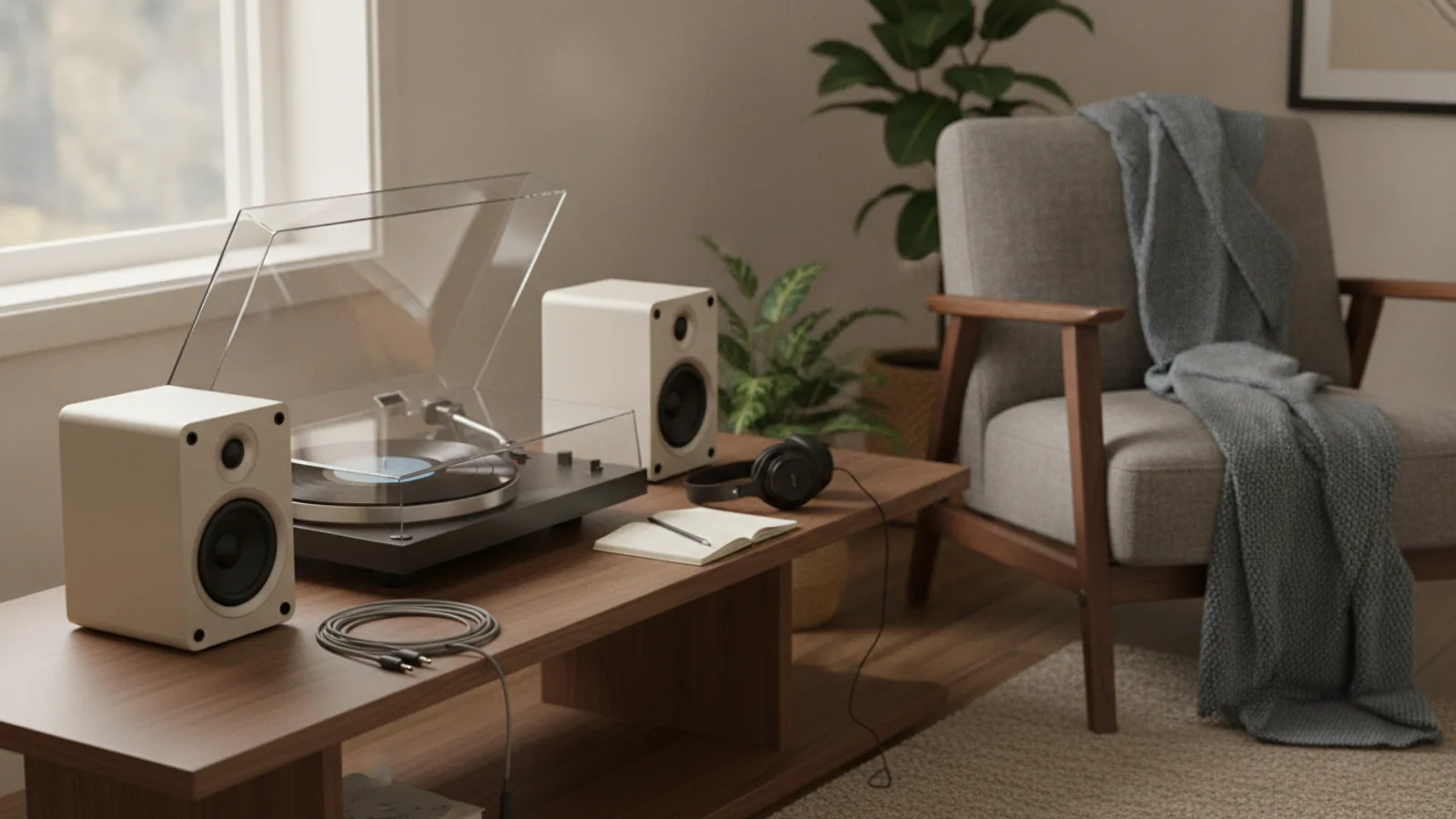
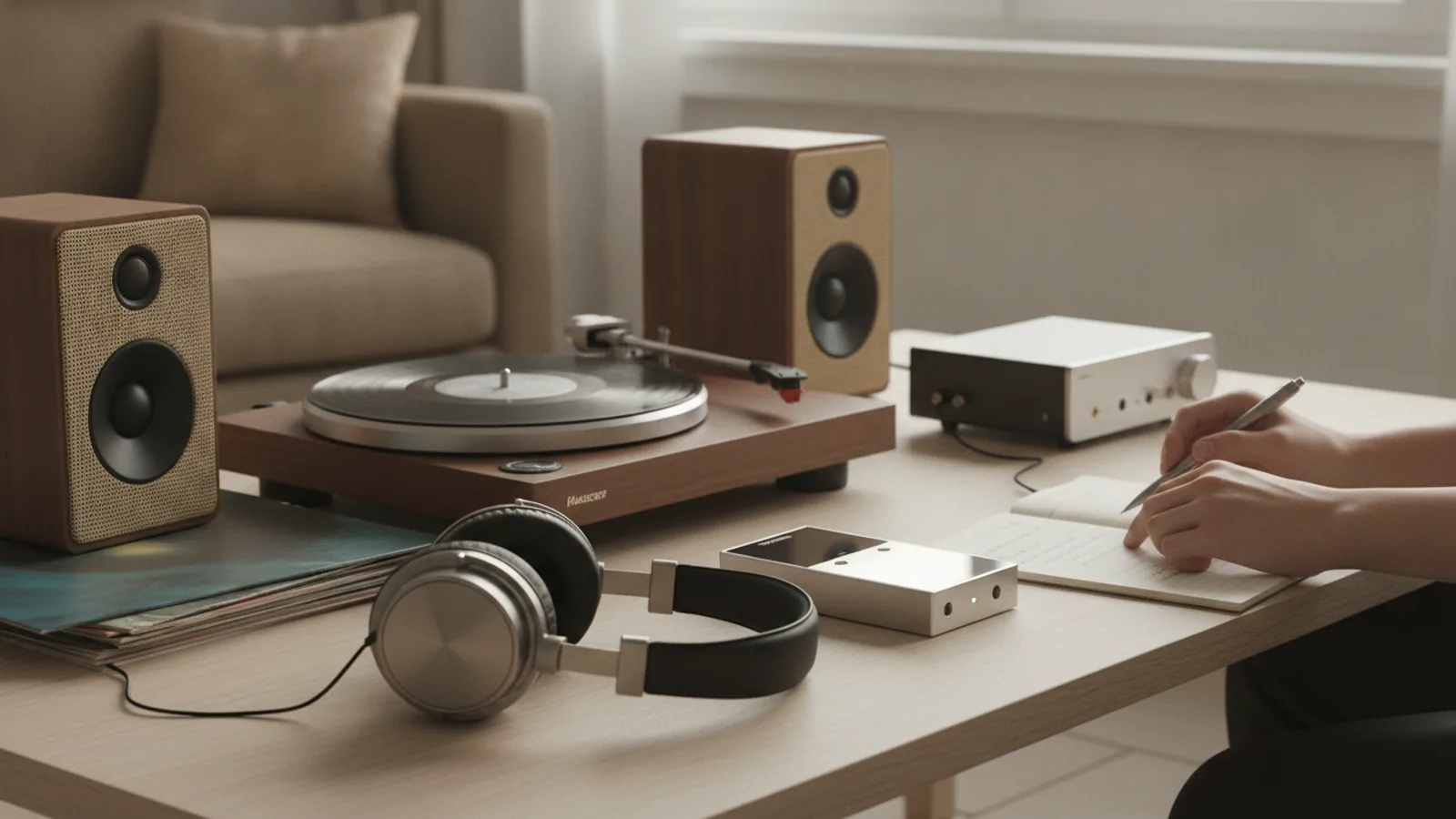
Bookshelf speakers come in various sizes, but without a rack, you'll likely place them on a shelf, stand, or wall mount. Measure the depth and width of the shelf or stand you plan to use. Add a few inches of clearance for ventilation and allow the speaker to sit firmly. If you're placing them on a shelf, measure the distance between shelves to ensure the speaker's height fits. For wall mounting, check the wall's stud location and the bracket's weight rating. Also, consider whether the speakers will be at ear level when you're seated. If not, you may need to tilt them slightly. Choosing the right size ensures the speakers don't look awkward and that they perform well. Large speakers on a small shelf may cause vibration, while very small speakers might not fill the room. Practical check: take a photo of the shelf and compare it with the speaker's dimensions when shopping.
Check Amplifier and Speaker Compatibility
Every bookshelf speaker has a power rating (watts) and impedance (ohms) specification. Your amplifier or receiver must be able to drive the speakers within their range. For efficient speakers (sensitivity above 87 dB), a low-powered amp works fine. But if your amp is old, verify its power output per channel. Check the speaker's manual for recommended amplifier power. Usually, you want the amp's power to be equal to or slightly higher than the speaker's peak rating. Also, match impedance: an 8-ohm speaker works with most amps, but a 4-ohm speaker demands more current. If your amplifier is rated for 6-16 ohms, it's safer to choose 8-ohm speakers. To verify your amp's specs, look on the back panel or in the manufacturer's documentation. This check prevents overheating and distortion during loud playback.
Consider Bass Port Placement and Room Boundaries
Speakers with a rear-firing bass port (a hole at the back) need space from the wall to avoid boomy, muddy bass. In a room without a rack, you might place speakers close to a wall. In that case, choose speakers with front-firing or down-firing ports, or sealed enclosures. To assess your room, measure the distance between the speaker's back and the wall when you place it in the desired spot. If that distance is less than 6 inches (15 cm), you need a front-port design. Also, consider if the speakers will be placed inside a cabinet or shelf enclosure. Enclosed spaces trap bass, so you'd need speakers with a boundary compensation switch or a sealed design. By addressing this, you ensure clean bass and clear mids. This check is often overlooked, leading to disappointing sound quality.
Evaluate Sound Quality with Familiar Music
The most important check is how the speakers sound to you. Before buying, listen to a few tracks you know well. These should include vocals, bass-heavy music, and acoustic details. Listen for clarity in the midrange, which is where voices and most instruments sit. Also, check for sibilance (harsh 's' sounds) and whether the bass is tight or boomy. If you're buying online, listen to a recording that's mastered neutrally. But ideally, visit a store that lets you audition. When listening, play your tracks at a moderate volume first, then turn it up. See if the speakers distort at higher volumes. Take note of how the sound changes when you move your head. If possible, ask if the store has a simple comparator to test multiple speakers. This ensures you pick a speaker that suits your taste and room.
Budget for Stands or Mounts if Needed
Bookshelf speakers are designed to sit on stands or shelves, but stands often provide better sound isolation and optimal height. If your room lacks a suitable shelf, you'll need to purchase speaker stands or wall mounts. This adds to the cost, so factor that into your decision. Measure the height of your seating position and choose stands that bring the tweeter to ear level. For wall mounts, check the bracket’s maximum load and the wall's strength. A floor-standing stand might be stable on carpet or hardwood. And if you have small children or pets, consider stands with anchor points for safety. By planning for this, you avoid unexpected expenses and ensure your speakers are positioned for the best sound. This step is often ignored, but it's crucial for long-term satisfaction.
Quick Reference
| Situation | Action | Why it helps |
|---|---|---|
| You have a small living room with limited surface space. | Measure your available shelf or tabletop area and choose the smallest bookshelf speakers that still deliver clear sound. | Small speakers are easier to place without a rack and still provide adequate sound for a smaller space. |
| You must place speakers very close to a wall (less than 6 inches). | Select speakers with front-firing bass ports or sealed enclosures to avoid overly boomy bass. | Rear ports require breathing room to produce natural bass; front ports avoid wall reflection issues. |
| Your amplifier is an older model with less than 50 watts per channel. | Choose speakers with high sensitivity (90 dB or above) and a nominal impedance of 8 ohms for easy driving. | High sensitivity speakers produce more volume with low power, reducing strain on the amplifier. |
Common Issues
- Speakers sound boomy or muddy when placed on a shelf.: Add isolation pads or foam under the speakers to decouple them from the shelf. Also, move the speakers slightly away from the wall or adjust the bass control.
- Speakers distort at moderate volume.: Check that the amplifier's power rating is sufficient and that the impedance matches. If not, replace with more sensitive speakers or a more powerful amplifier.
- No space for stands and you have to place speakers on a high shelf.: Tilt the speakers downward toward the listening area using tilting mounts or wedges to aim the tweeter at ear level.
Advanced Tips
- Experiment with speaker toe-in: angle the speakers toward the listening position to optimize stereo imaging.
- Use room treatment, like rugs or curtains, to reduce reflections and improve sound clarity.
- When connecting speakers, maintain proper polarity (positive to positive) and ensure wire ends are cleanly stripped to avoid short circuits.
Final Checklist
- Confirmed the speaker's physical dimensions fit the available space without a rack.
- Verified that your amplifier's power and impedance match the speaker's specifications.
- Chosen speaker placement that avoids wall proximity issues (or selected front-port speakers)
- Taste-tested the speakers with your own music and budgeted for stands or mounts if required.
FAQ
Can I place bookshelf speakers on the floor if I don't have shelves?
Yes, but floor placement is not ideal because the sound may be absorbed by furniture and the floor. If you must, tilt the speakers upward toward the listening position. Ideally, use low stands or wall mounts to raise them to ear level.
How much space is needed around rear-firing bass ports?
Most manufacturers recommend at least 6 inches (15 cm) of clearance between the back of the speaker and any wall or surface. If you cannot provide that, choose a front-port or sealed speaker.
What is the most important specification to match between a speaker and an amplifier?
Impedance is the most critical match. An amplifier is designed to work with a specific range of impedance, typically 4 to 16 ohms. If your speaker's impedance is too low, the amplifier may overheat or distort. Always check the amp's rated impedance range.