Common Mistakes When Setting Up A Listening Room Layout That Improves Sound Without A Renovation
A practical step-by-step guide to common mistakes when setting up a listening room layout that improves sound without a renovation, including preparation, instructions, common issues, tips, and next steps.
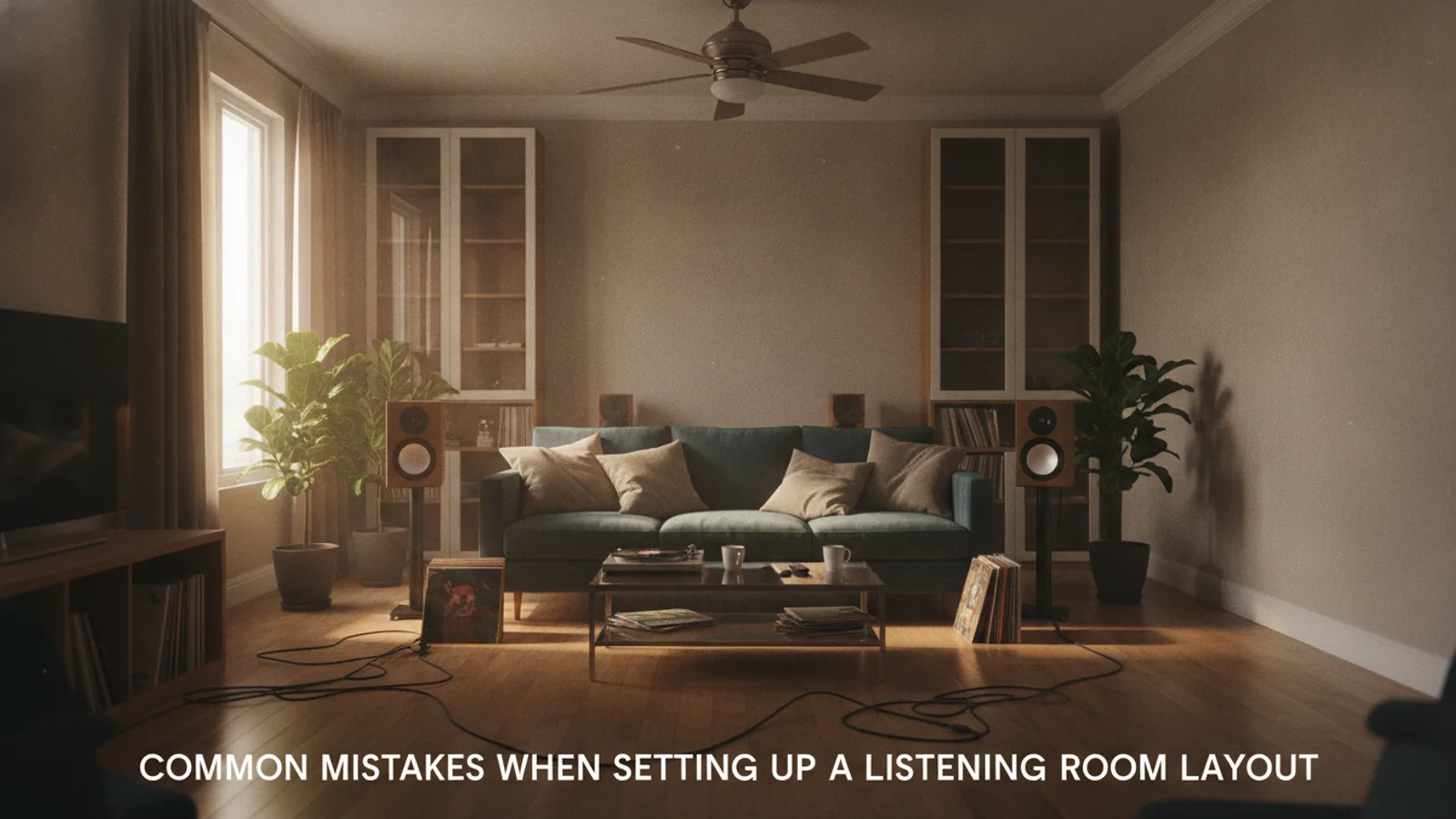
Common Mistakes When Setting Up A Listening Room Layout That Improves Sound Without A Renovation
Setting up a listening room for better sound often involves simple layout changes rather than expensive renovations. This guide covers common mistakes like placing speakers against walls, ignoring reflection points, and neglecting listening position symmetry. By addressing these issues with practical adjustments, you can improve clarity, imaging, and bass response without construction. Learn how to position speakers, treat reflections with household items, and optimize your seating area for a more accurate listening experience.
Fast Answer
- Move speakers away from walls and corners: place them at least one-third of the room's width into the room and position them symmetrically with the listening position to reduce bass buildup and improve stereo imaging.
- Use soft furniture, rugs, or bookshelves to absorb or diffuse early reflections: place absorptive materials at first reflection points on side walls and behind the speakers to sharpen the soundstage.
Before You Start
- Measure your room: know the dimensions, particularly the length, width, and height, as they affect speaker placement and listening position.
- Identify potential reflection points: note areas on side walls, floor, and ceiling where sound from speakers might bounce directly to your ears.
- Gather basic tools: a tape measure, a mirror (for finding reflection points), and commonly available absorptive items like rugs, curtains, or foam panels.
- Clear the listening area: remove unnecessary furniture, clutter, or fragile items from between the speakers and your seating to avoid unwanted reflections or vibrations.
Step-by-Step Instructions
Position Your Speakers Away from Walls
Start by placing your speakers at least two to three feet away from the back wall (the wall behind them) and at least two feet from side walls if possible. The distance from the back wall greatly affects bass response; too close to the wall will generate excess bass which muddies the midrange. In a typical rectangular room, put the speakers along the shorter wall, with the listening position centered. First, set the speaker tweeters at ear height when you are seated. Then measure equal distances from the wall and from the side walls for each speaker. Use a tape measure to verify symmetry. Finally, adjust the toe-in angle so that the speakers face directly at the listening position or slightly inward, but ensure they are equidistant from you. This first step creates a balanced soundstage and minimizes wall reflections that blur imaging.
Create an Equilateral Triangle Setup
Place your listening chair so that the distance between the speakers equals the distance from each speaker to your head. This forms an equilateral triangle with the speakers and your ears as vertices. This geometry ensures optimal stereo imaging and time alignment. Use a measuring tape to set the distance between the speakers, then position your chair accordingly. For instance, if speakers are six feet apart, your head should be six feet from each speaker. After setting distances, check that the tweeters are at ear level. Then adjust the toe-in angle so that the speakers aim slightly in front of your shoulders. This arrangement reduces phase cancellations and makes the center image (like vocals) appear solid. Listen to a track with clear vocals and confirm that the sound is focused in the center, not diffuse. If the center feels fuzzy, recheck distances and toe-in.
Eliminate Early Reflections with Absorbers
Early reflections are sounds that bounce off walls, ceiling, or floor and reach your ears a few milliseconds after the direct sound. They blur the clarity. To find the first reflection points, use a mirror: sit in your listening position and have a friend slide a mirror along the side wall. When you see the speaker in the mirror, mark that spot. Place an absorber there, such as a thick rug, curtain, or foam panel. Common reflection points are the side walls, the ceiling above between speakers and listener, and the area behind the speakers. For the floor, a rug can reduce reflections if it is not already present. For the back wall behind you, a diffuser or absorption can help, but do not over-dampen the room. The goal is to reduce early reflections without making the room dead. Use porous materials like acoustic foam, moving blankets, or even bookshelves with varied book depths to scatter some sound.
Optimize the Listening Position Away from Boundaries
Avoid sitting directly against the back wall or in the exact center of the room. Sitting near the back wall causes bass reinforcement, making low frequencies overpowering. The center of the room often has a null in bass response. Ideally, place your chair about 38% of the room's length from the front wall (the one behind the speakers). For example, in a 16-foot-long room, sit about 6 feet from the front wall. This position avoids major standing wave nulls. Use a measuring tape to locate this spot. Once seated, listen to music with deep bass and rock steady detail. If the bass sounds uneven when you lean forward or back, you have found a null. Move the chair a few inches until the bass becomes more even. This step greatly improves bass balance and bass extension in your listening experience.
Use a Rug to Control Floor Reflections
Floor reflections can cause comb filtering, which makes sound undulate. Most rooms have hard floors, so put a large rug in the area between the speakers and your listening position. The rug should ideally extend from the speakers forward to under your chair. This absorbs and scatters sound that bounces off the floor, reducing destructive interference. Check the material: thick rugs with a dense pile are better than thin ones. If you have wall-to-wall carpeting, you can skip this step. To test the effect, listen to a track with sibilance or cymbals, then place a rug, and see if the harshness decreases. The improvement is subtle but noticeable. Make sure the rug is large enough to cover the floor between the speakers and your ears, as the most important reflection areas are near the midpoint. This simple addition can enhance high-frequency clarity.
Calibrate Speaker Toe-In and Height
Toe-in refers to the angle at which each speaker is aimed relative to the listening position. Start with speakers pointed directly at your ears, then gradually angle them outward until you notice a widening of the soundstage but not a loss of center focus. The ideal toe-in depends on your speakers and the room acoustics. Also, adjust the height so that the tweeters are at ear level when seated. Use stable stands or adjust chair height. Listen to a mono recording (if available) or a track with a centered vocal, and adjust toe-in until the vocal appears solidly between the speakers, not pulled to one side. Ensure that both speakers have the same toe-in angle. Use a protractor or angle finder app to measure consistency. This fine-tuning maximizes high-frequency response and imaging accuracy.
Quick Reference
| Situation | Action | Why it helps |
|---|---|---|
| Speakers are within 1 foot of the back wall. | Move them at least 2–3 feet away from the wall, even if it changes the room's look. Use a tape measure to confirm distances before listening. | Close wall placement causes exaggerated bass and smears low frequencies, making the sound muddy and less detailed. |
| You hear a flutter echo or harsh sound when clapping in the room. | Add absorption to flat, parallel surfaces: place foam panels, heavy curtains, or rug-covered furniture on opposing walls. Clap again to verify a flutter sounds shorter than 0.5 seconds | Parallel walls create standing waves and flutter echoes that color the music, especially in mid and high frequencies. |
| The vocal image sounds diffuse or shifted when you turn your head. | Re-measure speaker distances and toe-in angles; use the mirror method to find first reflections and cover them with soft materials. | Imbalance in distance or aim breaks the stereo triangle, while uncorrected reflections blur the center image and reduce precision. |
Common Issues
- Bass sounds boomy or undefined.: Move speakers farther from walls and corners, especially if they are rear-ported. Place a rug on the floor and try breaking up parallel surfaces with bookshelves. Also move your listening position away from boundaries.
- Stereo image is narrow or lacks depth.: Ensure speakers are equidistant from you and form an equilateral triangle. Reduce toe-in angle if too aggressive. Add absorption at first reflection points on side walls to sharpen imaging.
- Sound is harsh or fatiguing at high volumes.: Identify and treat high-frequency reflections: place absorptive material like foam or thick curtains at mirror-determined reflection points. Also adjust tweeter height so they are at ear level, and soften toe-out angle to reduce treble emphasis.
Advanced Tips
- Use a laser pointer attached to the speaker's front to align the tweeters precisely with your ears; this ensures symmetry and proper aiming.
- Create DIY diffusers using wooden slats or bookcases placed at midpoints of side walls, breaking up reflections without absorbing too much energy.
- Experiment with speaker placement along the long wall versus the short wall; a long-wall setup can sometimes provide a wider soundstage but requires careful toe-in.
Final Checklist
- Speakers are at least 2 feet from back and side walls, with the tweeters at ear level.
- Listening position forms an equilateral triangle with speakers and is away from walls and central nulls.
- Rug placed between speakers and chair to control floor reflections.
- First reflection points on side walls and ceiling are covered with absorptive or diffusive materials.
FAQ
How much should I spend on acoustic treatment?
You can start with zero cost: repurpose thick blankets, rugs, or heavy curtains. For a few dollars, purchase foam panels or moving blankets. Avoid over-dampening; the goal is to tame reflections, not make the room dead. Always test simple layout changes first before investing.
Does room size matter a lot for sound quality?
Yes, but layout improvements help in any size. Small rooms often suffer from bass buildup; you can reduce it by moving speakers away from corners and using bass traps. Large rooms may have excessive echo, which you can control with area rugs and furniture. The key is to adjust placement to your specific dimensions.
How often should I re-arrange my listening setup?
Re-check after any major change like new furniture, moving to a new home, or changing speakers. Even seasonal changes like adding a rug or curtains can affect sound. A good habit is to do a quick listening test with familiar tracks monthly to ensure the setup still satisfies you.